Monitor Smarter, Not Harder: 5 FDA-Cleared Home Health Devices That Deserve a Place in Your Daily Routine
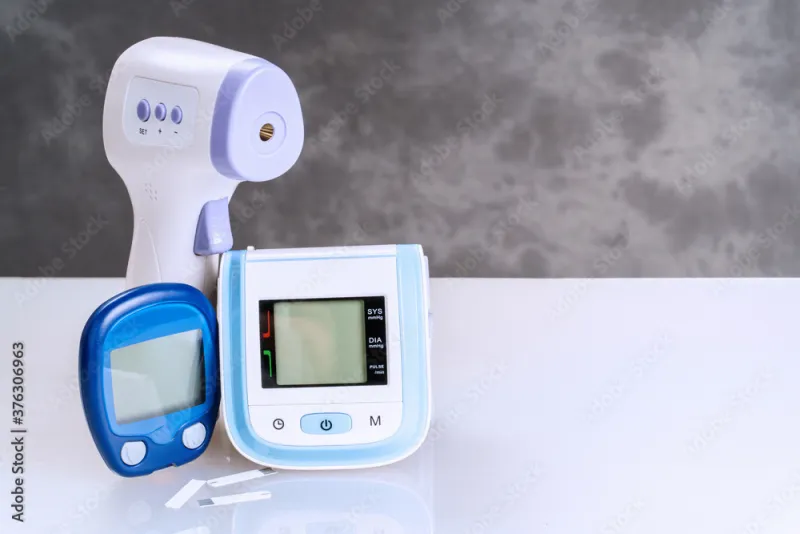
Photo: home health monitoring devices blood pressure glucose meter medical technology, via as2.ftcdn.net
American healthcare has long operated on a reactive model: you feel unwell, you schedule an appointment, a clinician measures something, and a treatment plan follows. This sequence, while familiar, has an inherent flaw — by the time symptoms prompt a visit, underlying conditions may have been developing silently for months or even years.
The good news is that a growing category of FDA-cleared consumer medical devices is shifting this dynamic. Designed for at-home use and available without a prescription, these tools empower individuals to track physiological data continuously, detect anomalies early, and arrive at clinical appointments armed with meaningful personal health records. At HealthServer Online, we believe that access to quality monitoring technology is a cornerstone of genuine preventative care — not a luxury reserved for patients already managing diagnosed conditions.
Here are five devices that merit serious attention, regardless of whether your physician has mentioned them.
1. Upper-Arm Oscillometric Blood Pressure Monitors With Irregular Heartbeat Detection
Blood pressure monitoring at home is not a new concept, but the current generation of validated upper-arm devices offers capabilities that older wrist-cuff models simply cannot match. Clinical-grade oscillometric monitors — particularly those validated against the American Medical Association's (AMA) Validated Device Listing — measure both systolic and diastolic pressure with accuracy comparable to office sphygmomanometers.
What distinguishes the latest models is the integration of atrial fibrillation (AFib) screening algorithms. AFib, a common cardiac arrhythmia affecting an estimated 6 million Americans, frequently goes undetected because it presents intermittently and without obvious symptoms. Devices such as the Omron Platinum and similar validated monitors flag irregular heartbeat patterns during routine readings, prompting users to seek clinical follow-up.
For individuals with hypertension, a family history of cardiovascular disease, or simply an interest in understanding their cardiovascular baseline, a validated upper-arm monitor is arguably the single most impactful home health investment available. Consistent home readings also help identify "white coat hypertension" — elevated readings that occur exclusively in clinical settings — which can otherwise lead to unnecessary medication.
What to look for: AMA or Dabl Educational Trust validation, memory storage for at least two users, and Bluetooth connectivity for integration with health apps or electronic health records.
2. Continuous Glucose Monitors (CGMs) for Non-Diabetic Metabolic Awareness
Continuous glucose monitors were originally developed for individuals managing type 1 and type 2 diabetes, providing real-time interstitial glucose readings every few minutes via a small sensor worn on the upper arm or abdomen. What has changed recently is their accessibility and relevance to a much broader population.
The FDA clearance of over-the-counter CGM options — including Abbott's Lingo and Dexcom's Stelo — has opened this technology to non-diabetic users interested in understanding how diet, exercise, sleep, and stress influence their blood sugar patterns. This matters because glucose dysregulation exists on a spectrum: prediabetes, which affects approximately 98 million American adults according to the CDC, is largely asymptomatic yet substantially elevates long-term risk for type 2 diabetes, cardiovascular disease, and metabolic syndrome.
Wearing a CGM for even two to four weeks can reveal actionable patterns — foods that cause unexpected glucose spikes, the stabilizing effect of post-meal walks, or the impact of poor sleep on fasting glucose levels — that a single annual HbA1c blood test would never capture.
What to look for: FDA clearance specifically for non-prescription use, wear duration per sensor, and compatibility with your smartphone's operating system.
3. Clinical-Grade Pulse Oximeters With Perfusion Index Readings
The COVID-19 pandemic introduced millions of Americans to pulse oximetry, but consumer awareness of device quality remains inconsistent. Not all pulse oximeters are created equal: fingertip devices sold as novelty wellness gadgets differ substantially from FDA-cleared medical-grade instruments in terms of accuracy across diverse skin tones and low-perfusion conditions.
Clinical-grade pulse oximeters — such as those manufactured by Nonin Medical or Masimo — provide not only oxygen saturation (SpO2) and pulse rate readings, but also perfusion index (PI) values that indicate the strength of the pulse signal at the measurement site. A low PI reading suggests that SpO2 data may be unreliable, prompting repositioning or further evaluation.
For individuals managing chronic obstructive pulmonary disease (COPD), asthma, heart failure, or sleep-disordered breathing, reliable SpO2 monitoring at home provides early warning of decompensation events that might otherwise require emergency intervention. The cost differential between a medical-grade device and a consumer novelty unit is modest — typically $50 to $150 — and the accuracy improvement is clinically meaningful.
What to look for: FDA 510(k) clearance, published accuracy data across a range of SpO2 values and skin tones, and perfusion index display.
4. FDA-Cleared Single-Lead ECG Monitors for Personal Cardiac Tracking
Beyond blood pressure cuffs, a category of compact single-lead electrocardiogram (ECG) devices has earned FDA clearance for at-home rhythm monitoring. The KardiaMobile by AliveCor is perhaps the most clinically validated example: users place their fingers on two electrodes for 30 seconds, and an AI algorithm analyzes the resulting ECG for signs of AFib, bradycardia, tachycardia, or normal sinus rhythm.
The clinical utility of this device is well-documented. Multiple peer-reviewed studies have demonstrated its sensitivity and specificity for AFib detection approaching that of standard 12-lead ECGs for rhythm classification purposes. For patients with palpitations, known paroxysmal arrhythmias, or post-cardiac procedure monitoring needs, this device provides a record of cardiac activity at the exact moment a symptom is experienced — information that is extraordinarily difficult to capture with periodic Holter monitor prescriptions.
Critically, the KardiaMobile generates a PDF-formatted ECG report that can be shared directly with a cardiologist, facilitating more productive clinical conversations.
What to look for: FDA clearance, peer-reviewed accuracy data, physician-shareable report formats, and subscription requirements for advanced AI interpretation features.
5. Medically Validated Sleep Monitors Beyond Consumer Wearables
Consumer fitness trackers offer sleep stage estimates based on wrist movement and heart rate variability, but their accuracy in clinical terms is limited. A newer category of FDA-cleared sleep monitoring devices — including the Withings Sleep Analyzer and similar under-mattress systems — provides respiratory disturbance detection, heart rate monitoring, and sleep cycle analysis without requiring the user to wear anything.
Of particular clinical relevance is the ability of validated devices to flag respiratory disturbance indices (RDI) consistent with obstructive sleep apnea (OSA). OSA affects an estimated 30 million Americans, yet the majority remain undiagnosed because formal polysomnography requires an overnight laboratory stay that many individuals find inconvenient or cost-prohibitive. Home sleep apnea testing, when conducted with appropriately cleared devices, can identify high-risk individuals who warrant follow-up diagnostic evaluation.
Chronic sleep disruption is independently associated with hypertension, impaired glucose metabolism, immune dysregulation, and cardiovascular mortality. Monitoring sleep quality with a validated device — rather than relying on subjective self-assessment — provides a more reliable foundation for meaningful lifestyle and clinical interventions.
What to look for: FDA clearance, independent accuracy validation against polysomnography, respiratory disturbance tracking (not just sleep stages), and long-term trend reporting.
The Case for Proactive Monitoring
Each of the devices described above shares a common value proposition: they convert invisible physiological processes into visible, actionable data. When used consistently and interpreted thoughtfully — ideally in partnership with a healthcare provider — they extend the reach of clinical medicine into the everyday environments where health is actually built or eroded.
At HealthServer Online, our medical device catalog prioritizes FDA clearance, independent validation, and practical usability. We encourage every customer to approach home monitoring not as a replacement for professional medical care, but as a powerful complement to it — one that makes each clinical encounter more informed, more efficient, and more likely to support long-term wellness outcomes.