No Record of You: How Your Supplement History Vanishes the Moment You Cross a State Line
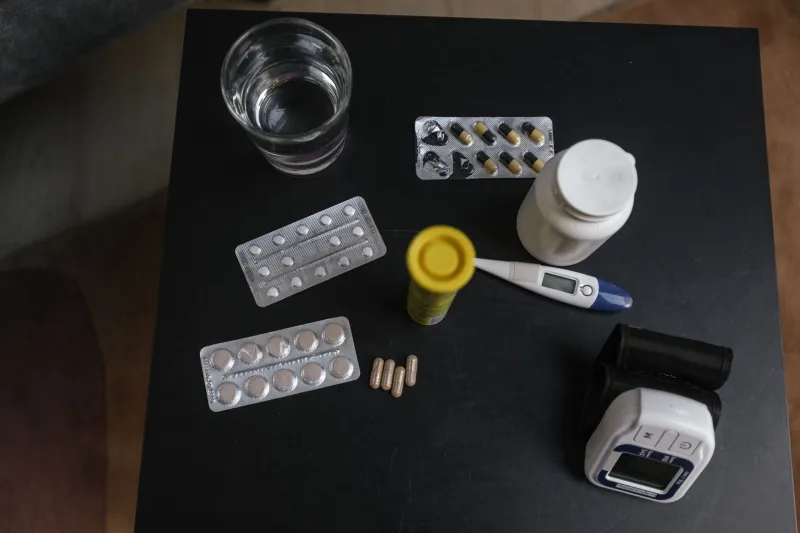
Every year, millions of Americans move to a new state, travel for specialized medical treatment, or divide their healthcare between providers in different regions. When they do, a surprising amount of critical health information follows them — primary care records, imaging results, prescription histories. But one category of health data disappears almost entirely: everything related to the supplements they take.
Unlike prescription drugs, which flow through a regulated pharmacy infrastructure that leaves a traceable trail, dietary supplements occupy a regulatory no-man's-land. They are purchased at grocery stores, ordered online, handed across the counter at wellness clinics, and recommended by practitioners who may never document the exchange in any formal record. When a patient moves from, say, Phoenix to Pittsburgh and establishes care with a new physician, their supplement regimen — which may include a dozen or more products — exists nowhere in any system that new provider can access.
This is not a minor administrative inconvenience. It is a structural gap with real clinical consequences.
The Regulatory Landscape That Creates the Problem
Dietary supplements in the United States are governed primarily by the Dietary Supplement Health and Education Act of 1994, commonly known as DSHEA. Under this framework, supplements are not classified as drugs. Manufacturers are not required to demonstrate efficacy before bringing products to market, and there is no federal mandate requiring that supplement use be documented in a patient's medical record.
Prescription medications, by contrast, are tracked through a network of pharmacy benefit managers, state prescription drug monitoring programs (PDMPs), and electronic health record (EHR) systems. A physician in a new state can often pull up a patient's prescription history within minutes. No equivalent infrastructure exists for supplements.
State PDMPs were designed to track controlled substances and prevent prescription drug misuse. They were never built to capture the supplement aisle at Whole Foods or the monthly subscription box arriving at someone's door. The result is that a patient who takes high-dose fish oil, St. John's Wort, vitamin K2, and a proprietary herbal blend arrives at a new provider's office as a blank slate — at least from a supplement standpoint.
What Gets Lost in the Move
The practical consequences of this invisibility unfold across several dimensions.
Interaction risks go undetected. A patient relocating from one state to another may be prescribed a new medication by a provider who has no idea they are already taking supplements with known interaction profiles. St. John's Wort, for instance, is a potent inducer of cytochrome P450 enzymes and can dramatically reduce the effectiveness of medications ranging from antidepressants to antiretrovirals. High-dose vitamin E can amplify bleeding risk in patients on warfarin. Without a complete supplement history, the prescribing physician is making decisions with incomplete data.
Adverse reaction histories vanish. If a patient experienced a significant adverse reaction to a supplement while living in one state — nausea, elevated liver enzymes, cardiovascular irregularities — that information may exist only in the records of the provider who documented it. If those records are not transferred, or if the patient received care at an urgent care clinic that doesn't communicate with their primary care physician, the next provider starts from zero. The patient may not think to mention it, or may not connect the reaction to the supplement at all.
Dosage context disappears. Supplement dosing is rarely standardized. One patient's "vitamin D supplement" might be 1,000 IU; another's might be 10,000 IU taken daily for years. Without documented history, a new provider cannot assess cumulative exposure, evaluate potential toxicity thresholds, or contextualize lab results that may reflect long-term supplementation patterns.
The Multi-State Patient's Particular Vulnerability
Americans who receive care across state lines — those who travel to academic medical centers for specialized treatment, snowbirds who split their time between two states, or patients who consult out-of-network specialists in other regions — face a compounded version of this problem. Each new provider encounter creates another opportunity for the supplement picture to be incomplete.
Consider a patient managing a chronic inflammatory condition who sees a rheumatologist in one state, a nutritionist in another, and a primary care physician in a third. Each practitioner may be recommending or approving supplements independently, with no visibility into what the others have suggested. The patient is effectively managing their own supplement reconciliation — a task most are neither trained nor equipped to perform accurately.
This fragmentation is not hypothetical. It reflects the actual experience of a significant and growing segment of the American population, particularly among older adults and those with complex or chronic health conditions who are most likely to use supplements and most likely to require care from multiple providers.
The Case for Personal Health Documentation
In the absence of a federal infrastructure that captures supplement use, the responsibility for maintaining a complete and portable supplement record falls to the individual. This is not an ideal solution — it places the burden on patients rather than systems — but it is the most practical one currently available.
Maintaining a personal supplement passport means documenting not just what you take, but when you started, the dose and form, why you are taking it, and any reactions or changes you have noticed. This record should be updated with every new purchase, every discontinued product, and every practitioner recommendation. It should travel with you to every medical appointment, across every state line.
At HealthServer Online, we believe that informed supplementation begins with documentation. Our platform supports customers in building a complete, organized record of their supplement regimen — one they can bring to any provider, in any state, at any time. When you purchase a supplement through our store, you are not just acquiring a product; you are adding to a health history that belongs to you and follows you wherever you go.
What Providers Can Do — and What They Often Don't
Clinicians bear some responsibility here as well. Best practice guidelines from organizations including the American Medical Association encourage providers to conduct a thorough medication reconciliation at every new patient encounter — one that explicitly includes supplements, herbals, and over-the-counter products. In practice, this rarely happens with the rigor it deserves. Time constraints, patient under-reporting, and the assumption that supplements are inconsequential all contribute to a culture of incomplete intake assessment.
Some forward-thinking health systems are beginning to build supplement fields into their EHR intake forms. A handful of integrative medicine practices maintain detailed supplement records as a matter of course. But these are exceptions, not the standard of care.
Until systemic change arrives — if it ever does — patients who cross state lines, whether permanently or temporarily, are operating without a safety net that most assume exists.
Taking Ownership of What the System Won't Track
The supplement gap is not going to be closed by regulation anytime soon. The political and commercial forces that shaped DSHEA in 1994 remain largely intact, and there is no imminent federal movement to bring supplements under the same tracking infrastructure as prescription drugs.
What patients can control is their own documentation. A thorough, up-to-date, and portable supplement record is one of the most underutilized tools in personal health management. It costs nothing to maintain, requires no special technology, and can prevent the kind of clinical miscommunication that turns a manageable health situation into a serious one.
Your health history is yours. Make sure it travels with you.