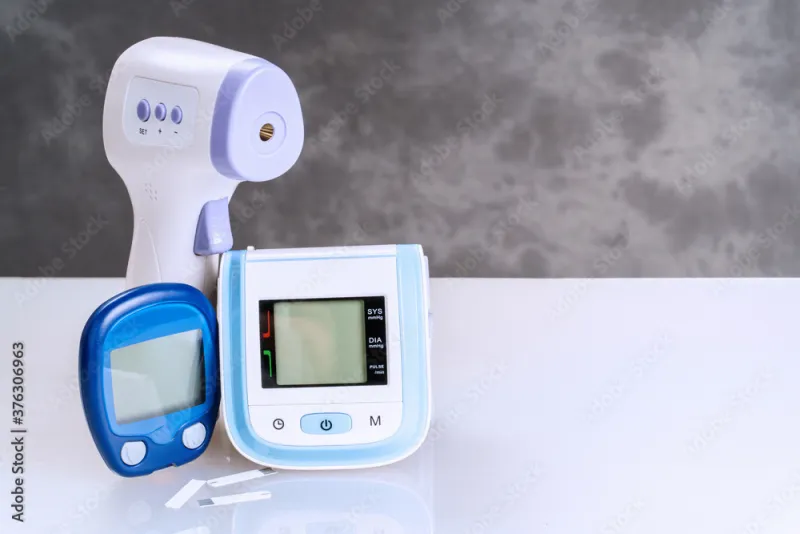
Your Doctor Can't See You Now: How At-Home Monitoring Devices Are Rewriting Chronic Disease Prevention
The average American waits approximately 26 days to secure a primary care appointment, according to a 2022 survey by Merritt Hawkins. For a patient managing hypertension, diabetes, or an irregular heartbeat, that is 26 days during which critical physiological changes can occur entirely undetected. It is precisely this gap—between the moment a health event begins and the moment a clinician is able to observe it—that a new generation of at-home monitoring devices is designed to close.
This is not a story about consumer gadgetry. It is a story about a measurable shift in how preventative medicine is being practiced across American households, and why the clinical community is paying close attention.
The Scope of the Problem: Chronic Disease in a Strained System
The Centers for Disease Control and Prevention estimates that six in ten American adults live with at least one chronic disease, and four in ten carry two or more. These conditions—ranging from cardiovascular disease to type 2 diabetes to chronic kidney disease—account for roughly 90 percent of the nation's $4.1 trillion in annual healthcare expenditures. Yet the very system designed to manage these conditions is under considerable strain.
Physician shortages, insurance barriers, and the lingering effects of pandemic-era healthcare disruption have made consistent monitoring of chronic conditions increasingly difficult for millions of patients. Annual check-ups, once considered a baseline standard, are now irregular occurrences for a significant portion of the population. The result is a clinical blind spot—conditions that progress silently between visits, only becoming apparent when they have already caused measurable harm.
At-home monitoring devices represent a structural response to this reality. Rather than relying solely on episodic clinical encounters, patients equipped with validated home devices can generate continuous or near-continuous physiological data that fills the intervals between appointments.
Blood Pressure Monitors: The Quiet Workhorse of Home Health
Among all at-home monitoring tools, validated blood pressure monitors have the deepest clinical evidence base. Hypertension affects approximately 116 million Americans, yet nearly one in five of those individuals remains unaware of their diagnosis. The condition is frequently asymptomatic, earning it the designation of "silent killer" for good reason.
Research published in JAMA Internal Medicine has consistently demonstrated that self-monitored blood pressure readings—when taken correctly and regularly—are often more representative of a patient's true cardiovascular status than readings captured in a clinical setting. The well-documented "white coat effect," in which patient anxiety artificially elevates blood pressure during office visits, can lead to both misdiagnosis and inappropriate medication adjustments.
The American Heart Association now recommends home blood pressure monitoring as a standard complement to clinical measurement. Devices that meet validation protocols established by organizations such as the Association for the Advancement of Medical Instrumentation (AAMI) provide readings clinically comparable to those obtained with professional sphygmomanometers. When patients track and share these readings with their physicians, medication titration becomes more precise, adherence improves, and outcomes measurably improve.
Continuous Glucose Monitoring: From Hospital Floors to Kitchen Counters
A decade ago, continuous glucose monitoring (CGM) technology was largely confined to hospital settings and clinical trials. Today, FDA-cleared CGM devices are available to millions of Americans managing type 1 and type 2 diabetes—and increasingly, to those seeking to understand how diet and lifestyle affect their metabolic function.
Traditional fingerstick glucose testing provides a single data point in time. A CGM system, by contrast, measures interstitial glucose levels every few minutes, generating a dynamic picture of glycemic fluctuation across an entire day. This granularity matters clinically. Research published in The Lancet and Diabetes Care has shown that CGM use is associated with significant reductions in HbA1c levels—the gold-standard marker of long-term blood sugar control—as well as reductions in both hypoglycemic and hyperglycemic episodes.
For patients with type 2 diabetes who are not using insulin, CGM data can illuminate the glycemic impact of specific foods, exercise patterns, and stress responses in ways that quarterly lab draws simply cannot. This behavioral feedback loop has demonstrated meaningful efficacy in supporting sustainable lifestyle modifications.
Wearable ECG Devices: Catching the Beat Your Doctor Might Miss
Atrial fibrillation (AFib) is the most common cardiac arrhythmia in the United States, affecting an estimated 2.7 to 6.1 million Americans. It is also one of the most underdiagnosed, in part because its episodes are often paroxysmal—meaning they occur intermittently and may not be present during the brief window of a standard 12-lead ECG performed in a clinical office.
FDA-cleared single-lead ECG devices, including those integrated into consumer wearables, have demonstrated a meaningful ability to detect AFib in real-world conditions. A landmark study published in The New England Journal of Medicine involving more than 400,000 Apple Watch users found that the device's photoplethysmography-based algorithm identified irregular pulse notifications in a subset of participants, a significant proportion of whom were subsequently confirmed to have AFib via patch ECG.
While single-lead wearable ECGs are not intended to replace clinical-grade diagnostic equipment, their value as a screening and surveillance tool is increasingly recognized by cardiologists. For patients with known risk factors—including age over 65, hypertension, obesity, or a family history of arrhythmia—continuous rhythm surveillance between clinical visits represents a substantive addition to a cardiac monitoring strategy.
Translating Data Into Action: The Role of the Patient
The clinical value of any monitoring device is ultimately contingent on how the data it generates is used. A blood pressure cuff that lives in a bathroom cabinet and is consulted once a month offers far less benefit than one used consistently and systematically. Similarly, CGM data that is never reviewed or shared with a healthcare provider has limited therapeutic utility.
Healthcare providers increasingly offer digital integration tools—patient portals, telehealth platforms, and remote patient monitoring programs—that allow home-generated data to flow directly into the clinical record. This infrastructure is expanding rapidly. The Centers for Medicare and Medicaid Services (CMS) has introduced reimbursement codes for remote patient monitoring, signaling a formal recognition that home-generated physiological data constitutes legitimate clinical input.
For patients, the practical implication is clear: the value of an at-home monitoring device is maximized when it is used consistently, when data is recorded or automatically transmitted, and when findings are discussed with a qualified healthcare provider.
Choosing Validated Devices: Why Regulatory Clearance Matters
Not all monitoring devices are created equal. The consumer health market contains a wide spectrum of products—ranging from rigorously validated clinical instruments to devices with limited or no independent accuracy verification. When selecting a home monitoring device, FDA clearance is a meaningful threshold. It indicates that the device has undergone a regulatory review process and met established standards for safety and performance.
For blood pressure monitors specifically, independent validation lists maintained by organizations such as the American Medical Association and the British and Irish Hypertension Society offer a practical reference for identifying devices with verified clinical accuracy.
At HealthServer Online, the medical devices available through our platform are selected with these standards in mind, prioritizing products that carry appropriate regulatory clearances and are supported by clinical evidence. Informed purchasing decisions begin with understanding what validation actually means—and demanding it.
A Shift in the Paradigm
The emergence of clinically validated at-home monitoring tools does not diminish the role of the physician. Rather, it enriches the clinical relationship by generating the kind of longitudinal, real-world data that office visits alone cannot provide. The paradigm is shifting from reactive medicine—treating conditions after they have caused harm—toward anticipatory care, in which physiological warning signs are detected early and addressed before they become crises.
For the millions of Americans navigating a healthcare system that is increasingly difficult to access, that shift may prove to be one of the most consequential developments in modern preventative health.