Sorting Fact From Fiction: A Clinical Look at Today's Most Popular Sleep Supplements
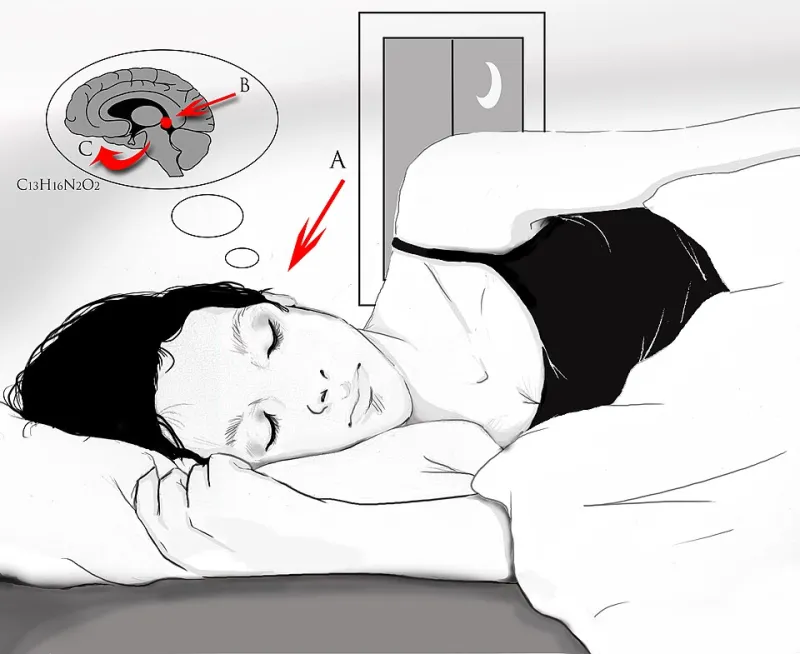
Photo: KathyG123, CC BY-SA 4.0, via Wikimedia Commons
American adults are not sleeping well. The Centers for Disease Control and Prevention estimates that roughly one in three US adults fails to get the recommended seven or more hours of sleep per night, a shortfall linked to elevated risks of cardiovascular disease, metabolic dysfunction, and impaired cognitive performance. In response, the sleep supplement industry has ballooned into a multi-billion-dollar market, offering everything from classic melatonin gummies to sophisticated botanical blends carrying price tags that rival a month of streaming subscriptions.
But which of these products are genuinely grounded in clinical evidence, and which rely primarily on clever packaging and persuasive testimonials? At HealthServer Online, we believe informed purchasing decisions begin with honest, evidence-based information. This article examines the most widely used sleep compounds, evaluating the strength of the research behind each one.
Melatonin: The Gold Standard With an Asterisk
Melatonin remains the most studied and most purchased sleep supplement in the United States. It is a hormone naturally produced by the pineal gland in response to darkness, and its primary function is signaling to the body that nighttime has arrived — not forcing sleep onset directly.
The clinical literature consistently supports melatonin for two specific applications: circadian rhythm disruptions such as jet lag and shift-work disorder, and delayed sleep phase syndrome, a condition in which the body's internal clock is shifted significantly later than conventional sleep times. For these use cases, doses as low as 0.5 mg to 1 mg taken 30 to 60 minutes before the desired sleep time have demonstrated effectiveness in randomized controlled trials.
Where melatonin becomes less reliable is in the treatment of chronic insomnia characterized by difficulty maintaining sleep rather than initiating it. Many commercially available products also contain doses far exceeding what research supports — some capsules contain 5 mg, 10 mg, or even higher — which can blunt the body's own melatonin sensitivity over time. If melatonin is appropriate for your situation, starting at the lowest effective dose is strongly advisable.
Drug interaction note: Melatonin may amplify the effects of blood thinners such as warfarin and can interact with immunosuppressants. Consult your physician if you are managing any chronic condition.
Magnesium: A Foundational Mineral With Legitimate Sleep Benefits
Magnesium deficiency is remarkably common among American adults, with national dietary surveys suggesting that nearly half of the population falls short of adequate intake. This matters for sleep because magnesium plays a direct role in regulating the GABA (gamma-aminobutyric acid) neurotransmitter system — the same pathway targeted by prescription sleep medications, though through a far gentler mechanism.
Clinical trials have shown that magnesium supplementation — particularly in older adults who tend to be more deficient — can meaningfully improve sleep efficiency, reduce the time it takes to fall asleep, and decrease early morning awakenings. Magnesium glycinate and magnesium threonate are generally considered the most bioavailable forms for neurological benefit, while magnesium oxide, commonly found in lower-cost supplements, is poorly absorbed and more likely to cause gastrointestinal discomfort.
A typical therapeutic dose ranges from 200 mg to 400 mg of elemental magnesium taken in the evening. This is one of the more cost-effective sleep supplements available, and its broad physiological role in muscle relaxation and nervous system regulation makes it a reasonable foundational addition for most adults.
L-Theanine: The Calm-Without-Sedation Compound
Derived from green tea leaves, L-theanine is an amino acid that promotes alpha brainwave activity — the mental state associated with relaxed alertness. Unlike sedative compounds, it does not induce drowsiness directly. Instead, it appears to reduce physiological anxiety and mental chatter that often prevents sleep onset.
Small but well-designed studies have found that L-theanine at doses of 200 mg to 400 mg can reduce subjective stress and improve sleep quality ratings, particularly in individuals whose sleep difficulties are anxiety-related rather than circadian in origin. It is frequently combined with magnesium or low-dose melatonin in commercial formulations, and this pairing is supported by plausible synergistic mechanisms even if large-scale combination trials remain limited.
L-theanine has an excellent safety profile with no significant known drug interactions, making it one of the more versatile options for adults exploring sleep support.
Apigenin: The Emerging Compound Worth Watching
Apigenin is a flavonoid found naturally in chamomile, parsley, and celery. It has gained considerable attention in recent years — partly driven by popular science podcasters — for its purported ability to bind to GABA-A receptors in a manner somewhat analogous to benzodiazepines, though far more mildly.
The honest assessment here is that the current human clinical data is limited. Most compelling evidence comes from animal models and in-vitro studies, with a smaller number of human trials suggesting modest anxiolytic and sedative effects at doses around 50 mg. Its long history of safe consumption through chamomile tea provides some reassurance regarding tolerability.
Apigenin is not a replacement for established sleep interventions, but for individuals seeking a gentle, plant-derived addition to a broader sleep support regimen, it represents a reasonable low-risk option. Notably, it may interact with hormonal medications due to mild estrogenic activity, which warrants a conversation with your healthcare provider.
Valerian Root and GABA Supplements: Proceed With Caution
Valerian root is one of the oldest herbal sleep remedies in Western medicine, yet the clinical evidence remains frustratingly inconsistent. While some trials report modest improvements in sleep latency and quality, others show no significant benefit over placebo. Standardization of active compounds across commercial products varies widely, making direct comparisons difficult.
Oral GABA supplements have an even more complicated picture: the prevailing scientific view is that exogenous GABA molecules do not readily cross the blood-brain barrier in meaningful quantities, raising legitimate questions about the mechanism by which any observed benefits occur.
Both compounds are widely marketed with confident claims that outpace the available evidence. They are not necessarily harmful for most healthy adults, but consumers should be skeptical of premium pricing for these ingredients.
Building a Rational Sleep Supplement Strategy
Rather than reaching for the most expensive blended formula on the shelf, a more strategic approach involves identifying the specific nature of your sleep difficulty first:
- Trouble falling asleep due to racing thoughts? L-theanine and low-dose melatonin represent the most evidence-supported starting point.
- Waking frequently through the night? Magnesium glycinate addresses a common physiological deficiency that contributes to disrupted sleep architecture.
- Jet lag or shift-work disruption? Standard-dose melatonin (0.5 mg to 3 mg) timed appropriately to your target sleep window has the strongest evidence base for this application.
- Mild anxiety-related insomnia? A combination of L-theanine and magnesium offers a well-tolerated, non-habit-forming foundation.
At HealthServer Online, our Nutrition & Supplements catalog is curated with an emphasis on products that disclose their ingredient sourcing, third-party testing credentials, and dosing transparency. When evaluating any sleep supplement, look for NSF International or USP verification seals, which confirm that a product contains what its label claims.
Finally, no supplement should serve as a substitute for addressing the behavioral and environmental factors that underpin healthy sleep — consistent sleep schedules, limiting blue light exposure in the evening, and moderating caffeine intake all remain foundational. Supplements are most effective when layered onto these habits, not used in their place.
Always consult a licensed healthcare provider before beginning any new supplement regimen, particularly if you are pregnant, nursing, or managing a chronic medical condition.