Alert, But Asymptomatic: Learning to Respond—Not React—When Your Wearable Raises a Flag
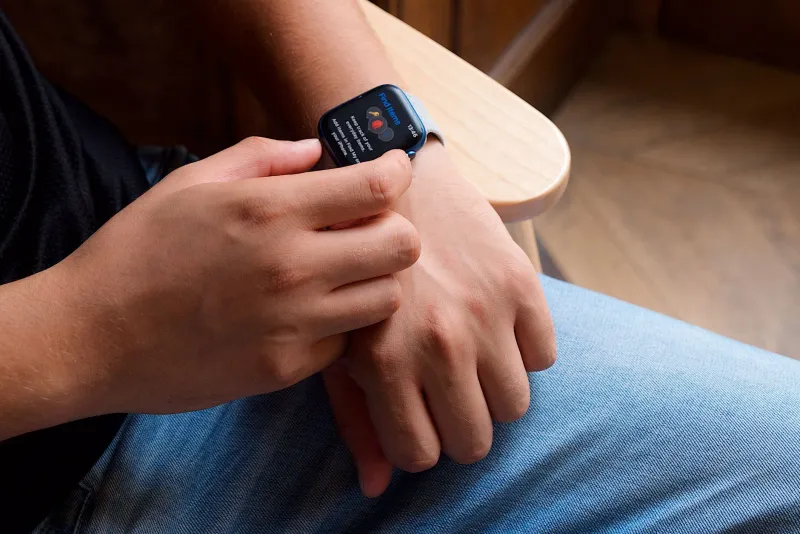
It arrives without warning—a quiet buzz on the wrist, a notification on the screen, and suddenly the words: Irregular heart rhythm detected. You pause. You feel fine. Your chest isn't tight, you aren't dizzy, and you were doing nothing more strenuous than reading the morning news. The device is concerned. You are not sure whether you should be.
This is the defining tension of consumer health wearables in 2024: they can detect physiological signals before the body has generated any subjective sensation of illness. That capability is genuinely extraordinary. It is also, for millions of Americans, a source of significant confusion—and sometimes unnecessary fear.
The question is not whether wearable alerts are useful. Evidence increasingly suggests they are. The question is how to interpret them accurately, respond proportionately, and avoid the twin failure modes of dismissiveness on one side and medical anxiety on the other.
What Wearables Are—and Are Not—Designed to Do
To interpret an alert intelligently, it helps to understand the underlying technology. Most consumer-grade fitness trackers and smartwatches use photoplethysmography (PPG)—a method that detects blood volume changes in the skin using optical sensors—to estimate heart rate and rhythm. More sophisticated devices, including several FDA-cleared smartwatches, incorporate a single-lead electrocardiogram (ECG) that can generate a rhythm strip comparable to a portion of a clinical 12-lead ECG.
These are meaningful tools. But they are screening instruments, not diagnostic ones. A positive alert from a PPG-based device means the algorithm detected a pattern that resembles an irregularity. It does not mean you have been diagnosed with anything. The distinction matters enormously.
False positives occur. They occur more frequently during exercise, when motion artifact can disrupt the optical signal. They occur in individuals with darker skin tones, where the optical sensors have demonstrated reduced accuracy in some studies. They occur when a device is worn loosely, when the skin is cold, or when the wearer is simply moving in ways the algorithm was not trained to expect.
This is not a reason to distrust the technology. It is a reason to contextualize what it tells you.
The Specific Alerts That Warrant Closer Attention
Not all wearable notifications carry equal clinical weight. Understanding which signals deserve more serious consideration—and which are more likely to represent noise—can help calibrate your response.
Atrial fibrillation (AFib) notifications are among the most clinically significant alerts a consumer device can generate. AFib is the most common sustained cardiac arrhythmia in the United States, affecting more than 6 million Americans, and it carries a substantially elevated stroke risk. FDA-cleared ECG-capable devices have demonstrated reasonable accuracy in detecting AFib in clinical validation studies, with sensitivity and specificity rates generally above 85% in appropriate populations. A single AFib alert in a person with no prior history does not confirm a diagnosis—but it warrants a conversation with a physician and, in most cases, a formal 12-lead ECG.
Low blood oxygen (SpO2) alerts are more variable in their significance. Consumer-grade pulse oximetry is subject to the accuracy limitations described earlier, and a single reading of 94% in an otherwise healthy individual who feels well may reflect sensor error rather than true desaturation. A pattern of low readings—particularly occurring during sleep, which may suggest sleep apnea—is more clinically meaningful than an isolated data point.
Elevated resting heart rate notifications should be interpreted in the context of personal baseline. A heart rate of 95 beats per minute in someone whose typical resting rate is 58 is more significant than the same reading in someone who regularly runs at 90. Sustained elevation over several days, particularly accompanied by fatigue or other symptoms, warrants medical attention.
Irregular sleep architecture alerts—reduced REM sleep, frequent awakenings, elevated nighttime heart rate—are the least actionable as standalone signals. Sleep tracking on consumer devices is notoriously imprecise, and the clinical thresholds for what constitutes pathological sleep disruption are not straightforwardly mapped to wearable metrics. These notifications are most useful as longitudinal trend data rather than acute alerts.
The Psychology of the Asymptomatic Alert
There is a particular psychological difficulty in receiving a health warning when you feel well. The body's subjective experience is, for most people, the primary reference point for health. Feeling fine is deeply reassuring. A device contradicting that reassurance creates a kind of cognitive dissonance that resolves in one of two directions: dismissal or catastrophizing.
Dismissal is the more common response, and in many individual cases, it is the correct one. Most single, isolated alerts from consumer wearables do not represent acute medical emergencies. Acting as though every notification requires an immediate ER visit would overwhelm the healthcare system and generate enormous unnecessary expense.
However, the pattern of routine dismissal is where genuine risk accumulates. Paroxysmal AFib, by definition, comes and goes. A person who receives three AFib alerts over two weeks, feels fine each time, and ignores all three has potentially missed an important window for anticoagulation therapy that could prevent a stroke. The absence of symptoms is not the same as the absence of disease.
Catastrophizing carries its own costs—financial, psychological, and systemic. Individuals who present to emergency departments for evaluation of asymptomatic wearable alerts represent a meaningful and growing share of ER utilization. The workup for an asymptomatic arrhythmia notification typically involves an ECG, blood work, and possibly extended cardiac monitoring. If the alert was a false positive, the patient has incurred several thousand dollars in costs and considerable anxiety for a non-event.
A Practical Framework for Response
The goal is calibrated action—neither reflexive dismissal nor disproportionate alarm. The following framework offers a starting point.
Document the alert. Note the time, what you were doing, how you felt, and any surrounding context. This information is genuinely useful to a clinician.
Assess for accompanying symptoms. Chest pain, shortness of breath, near-syncope, or palpitations that you can subjectively feel alongside a device alert significantly elevate the clinical concern. These combinations warrant urgent medical evaluation.
Consider the pattern, not the point. A single alert is data. Three alerts over two weeks is a pattern. Patterns warrant physician contact; isolated alerts warrant monitoring.
Contact your primary care physician before the emergency room. For asymptomatic alerts without accompanying symptoms, a telehealth call or a scheduled office visit is usually the appropriate first step. Most physicians can review a wearable-generated ECG strip remotely and advise accordingly.
Understand your personal risk profile. A 65-year-old with hypertension and diabetes who receives an AFib alert faces meaningfully different clinical stakes than a 28-year-old recreational runner with no medical history receiving the same notification. Context is everything.
Living Productively With Continuous Monitoring
The broader cultural adjustment that wearable technology demands is a shift from episodic health awareness to continuous health literacy. Americans have historically interacted with healthcare primarily in response to symptoms. Devices that generate data between those symptomatic episodes require a new kind of interpretive skill—one that the healthcare system has not yet fully developed the infrastructure to support.
That gap places responsibility on the individual. Understanding what your device measures, how it measures it, and what its validated accuracy looks like in populations similar to you is foundational knowledge for anyone wearing health-monitoring technology. The device manufacturers who provide that information transparently—and the clinicians who engage with wearable data as legitimate clinical input—are the partners worth seeking out.
The alert on your wrist is not a diagnosis. It is an invitation to pay attention. Learning to accept that invitation thoughtfully, without panic and without indifference, may be one of the more important health skills of the current era.