When Your Health Device Fails at the Worst Possible Moment: A Guide to Device Redundancy and Warranty Reality
For the roughly 133 million Americans living with at least one chronic condition, home health monitoring devices have graduated from convenient gadgets to genuine medical necessities. A continuous glucose monitor that stops transmitting, a cardiac rhythm tracker that fails to record an arrhythmia event, or a blood pressure cuff that returns erroneous readings during a hypertensive episode—these are not merely inconveniences. They are scenarios with real clinical consequences.
Yet the conversation around home health devices rarely extends beyond initial purchase decisions. Warranty terms, data continuity plans, and backup protocols are topics most users never encounter until a failure forces the issue. By then, the moment to prepare has already passed.
The Anatomy of a Device Failure
Home health monitoring devices fail in ways that range from the mundane to the medically significant. Battery degradation is among the most common causes of gradual performance decline—sensors that once provided accurate readings begin returning values that drift from clinical reality without triggering any error notification. Software failures, particularly after firmware updates, can cause devices to freeze, reset, or lose stored data. Physical damage from everyday use—dropped devices, moisture exposure, worn sensor contacts—accounts for a significant portion of user-reported failures.
The timing of these failures is indifferent to medical circumstance. A continuous glucose monitor does not know that its user is managing a post-surgical recovery. A home ECG device has no awareness that its readings are being monitored by a cardiologist following a recent cardiac event. When failure occurs, it occurs on its own schedule.
The clinical implications depend heavily on the device's role in a user's health management. For someone using a fitness wearable primarily for motivation, a device failure is an inconvenience. For someone whose physician is making medication titration decisions based on home blood pressure readings, a device failure introduces a gap in clinically relevant data that may not be apparent to either party.
What Manufacturer Warranties Actually Cover
Most home health device warranties are structured around manufacturing defects, not use-case reliability. A standard one-year limited warranty—common across the category—typically covers defects in materials and workmanship. It does not cover normal wear and tear, physical damage, water damage beyond a device's rated resistance level, or battery degradation after a specified number of charge cycles.
Several aspects of standard warranty terms deserve particular attention from health-conscious consumers.
Replacement timelines. Even when a warranty claim is valid, the process of shipping a defective device, processing the claim, and receiving a replacement typically takes seven to fourteen business days. For users who depend on daily monitoring, this window represents a meaningful data gap—and a period during which a health event may go undetected or undocumented.
Data is not covered. No standard device warranty addresses the loss of historical health data stored on the device itself. If a device fails and stored readings are unrecoverable, that data is simply gone. Clinical records that incorporated that data remain accurate, but any readings that existed only on the device—not yet synced to an app or cloud platform—are permanently lost.
Clinical liability is explicitly excluded. Manufacturer warranties universally disclaim any liability for health outcomes associated with device malfunction. This is both legally standard and practically significant. If a device fails to detect an arrhythmia that would have prompted a clinical intervention, the manufacturer bears no legal responsibility for the resulting harm. This does not mean such situations are without recourse, but it does mean that recourse, if any, lies outside the warranty framework.
Extended warranty value varies considerably. Third-party and manufacturer-extended warranties offer additional coverage periods, but their value depends entirely on what they cover. Some extended warranties add accidental damage protection—a meaningful addition for frequently handled devices. Others simply extend the defect coverage period without addressing the categories of failure most likely to occur.
The Case for Device Redundancy
For individuals whose health monitoring is medically significant rather than recreational, device redundancy is not an overreaction. It is a rational response to the failure patterns described above.
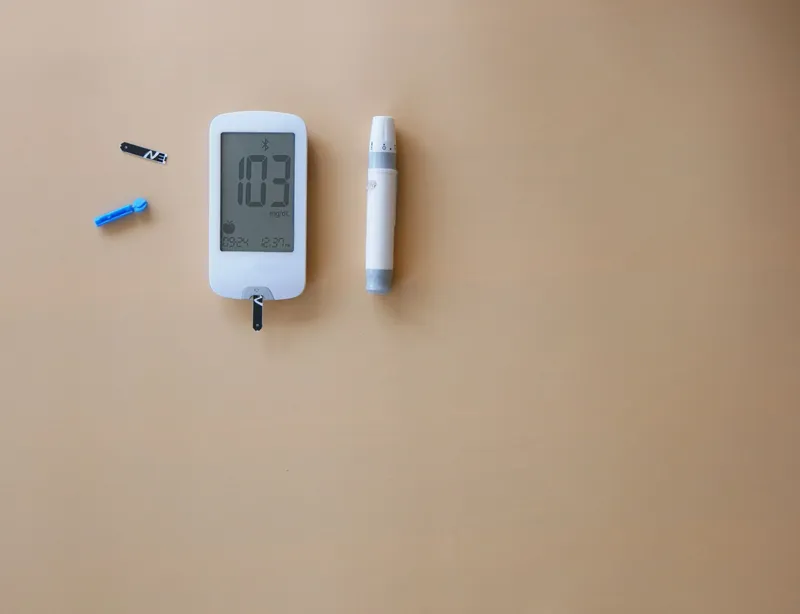
Redundancy does not necessarily mean owning two identical devices. In many cases, a primary device and a backup device serving the same measurement function—even if the backup is a less sophisticated model—provides meaningful protection. A user whose primary device is a Bluetooth-enabled, cloud-syncing blood pressure monitor might maintain a basic validated cuff as a backup. A continuous glucose monitor user might keep an adequate supply of traditional glucose test strips and a compatible meter as a contingency.
The key principle is that backup systems must be functional and familiar before they are needed. A backup device that has never been calibrated, whose battery has been allowed to drain, or whose operation is unfamiliar to the user is not a functional backup—it is a false sense of security.
Data Continuity: An Overlooked Priority
Beyond device hardware, data continuity deserves independent consideration. Health monitoring devices generate longitudinal data whose value compounds over time—a week of blood pressure readings is informative; six months of readings is clinically meaningful. Protecting that data requires deliberate action.
Most modern health monitoring applications offer cloud synchronization, but synchronization is only as reliable as the user's engagement with it. Devices that sync automatically are preferable to those requiring manual data transfers. Users should periodically verify that synchronization is functioning correctly rather than assuming it is.
For individuals whose health data is shared with a physician or care team, establishing a regular cadence of data exports—whether through the device application's built-in export function or manual record-keeping—creates a redundant record that survives individual device failures.
Practical Steps for Serious Health Monitors
Users who depend on home health devices for medically significant monitoring should consider the following framework.
First, read the warranty document before a crisis rather than during one. Understanding what is and is not covered—and what the replacement timeline looks like—allows for informed decisions about backup systems and extended coverage.
Second, establish and test a backup monitoring protocol. Identify what you would do if your primary device became unavailable for ten days. If the honest answer is "nothing," that gap warrants attention.
Third, confirm that your health data is being preserved in a location independent of your physical device. Cloud sync, periodic manual exports, or regular reports to a care team all serve this purpose.
Fourth, discuss device failure scenarios with your physician. In cases where home monitoring data is informing clinical decisions, your care team should know your backup plan—and should have a protocol for how to manage a monitoring gap if one occurs.
The devices available through platforms like HealthServer Online represent meaningful advances in accessible health monitoring. Their value is maximized not just by selecting the right device, but by maintaining the systems that keep that monitoring reliable when it matters most.